Princess Margaret Cancer Centre  ·  Structural Genomics Consortium  ·  Toronto
epigenome labCANCER · GENOME REGULATION · ONCOLOGY
Research

Understanding cancer through genome regulation.

We combine experimental epigenomics, single-cell multiomics, 3D genome biology and computational approaches to study cancer progression, cellular plasticity and therapeutic response. Integrating fundamental discoveries with clinically relevant models, we explore opportunities for biomarker research and precision oncology.

RESEARCH / 01

Cancer epigenomics

We investigate how chromatin states, histone modifications, enhancer activity and epigenomic alterations regulate gene expression and cancer cell identity. Our research examines the mechanisms underlying tumour heterogeneity, progression, plasticity and response to therapy.
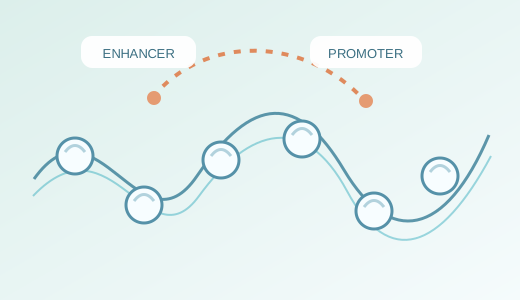
Conceptual illustration of enhancer-promoter communication across chromatin
RESEARCH / 02

Single-cell multiomics

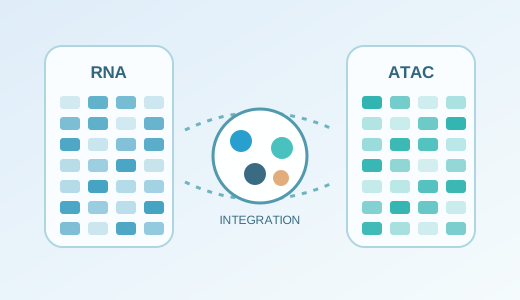
We integrate transcriptomic and epigenomic profiling at single-cell resolution to characterize cellular heterogeneity and identify regulatory programs associated with cancer cell states. These analyses reveal molecular signatures relevant to tumour evolution, treatment response and candidate therapeutic vulnerabilities.

Conceptual RNA and ATAC single-cell integration diagram
RESEARCH / 03

3D genome architecture

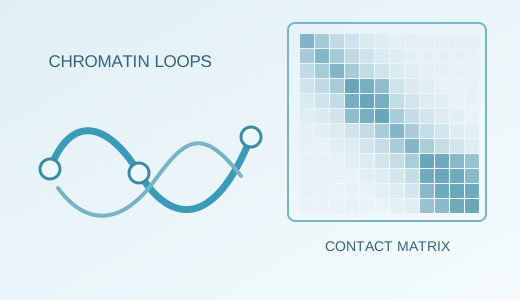
We investigate how three-dimensional genome organization and chromatin interactions shape gene regulation. Our experimental and computational research examines chromatin contacts, regulatory interactions, and structural variation across biological contexts.

Conceptual chromatin looping and contact matrix, not experimental data
RESEARCH / 04

Translational oncology

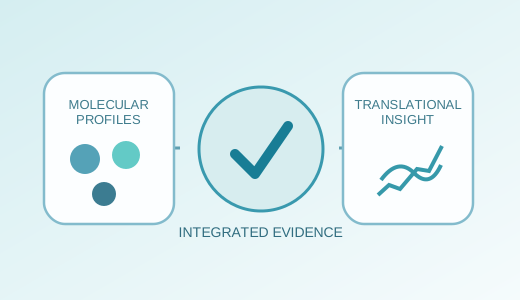
We connect molecular and computational findings with clinically relevant questions. Using patient-derived models, functional studies and integrated multiomics, we explore molecular stratification, candidate biomarkers and therapeutic vulnerabilities that may inform precision oncology.

Conceptual molecular profiling to translational insights diagram